

Every parent wants a child who can concentrate, listen properly and keep going when something is hard. Almost no parent knows how to teach those three things directly — because they cannot be taught directly. They are built by repetition in a setting where the child cares about the outcome.
Exams can wait. The habits that make exams possible cannot.
Why focus is a habit, not a personality trait
We talk about children as “good concentrators” or “easily distracted”, as if it were fixed. In practice, attention at three and four is a trainable capacity: it grows with practice, in short sessions, on tasks the child can nearly do on their own.
The conditions that grow it are unglamorous. A task with a clear ending. A duration the child can finish. An adult nearby who is not correcting every ten seconds. Repetition of the same task until it becomes automatic — because automatic is what frees up attention for the next thing.
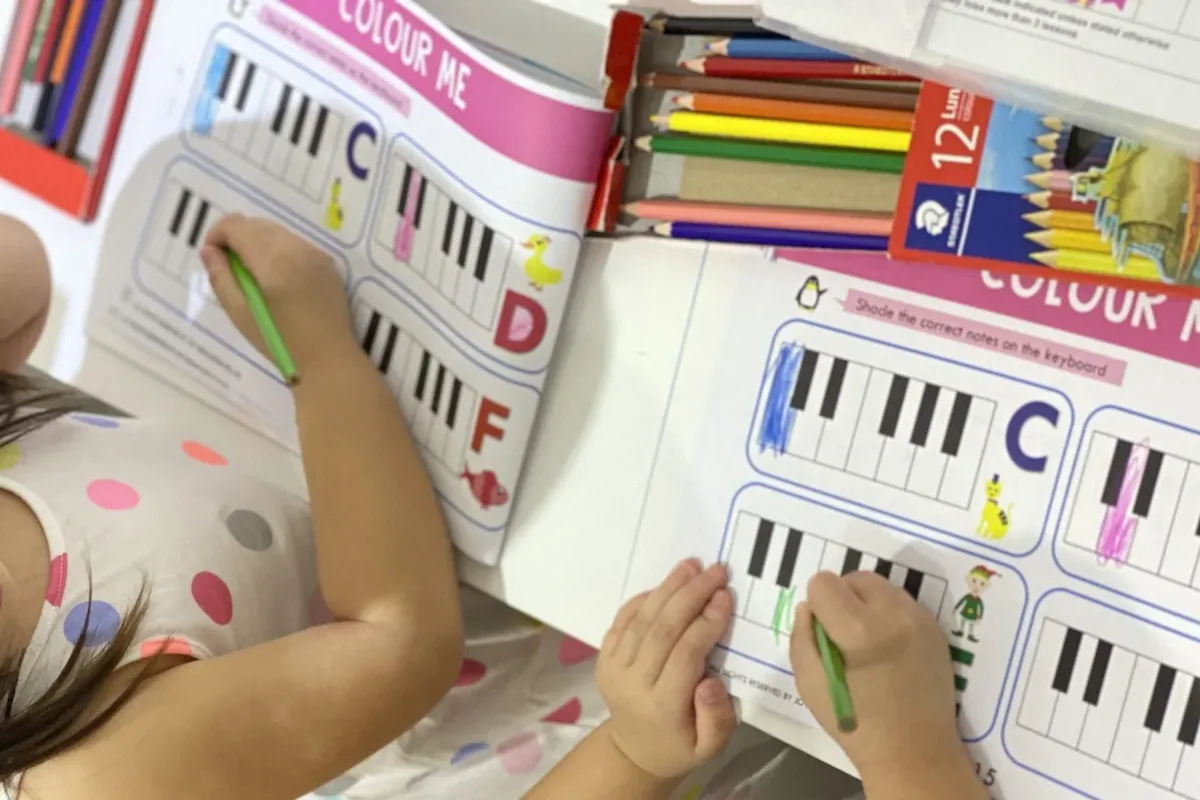
A piano lesson is a near-perfect container for this: one new idea, ten minutes, a piece that has an end, and the same piece next week.
Why listening is different from hearing
Hearing is passive. Listening is the decision to compare what you expected with what you got. That comparison is what a piano lesson asks for constantly — is that the right note, is that in time, did both hands land together.
Children who practise it start doing it elsewhere: they notice when a story skips a page, when a song changes key, when an instruction has two parts and they only did one. Parents describe this as “suddenly more switched on”. It is not a personality change; it is a skill that has become automatic.
Why perseverance needs a visible result
“Keep trying” is meaningless to a three-year-old unless they can see what trying produces. Piano gives them that: yesterday’s bar was bumpy, today’s is smooth, and they can hear the difference in ten seconds.
That immediate, objective feedback is rare at this age. Sticker charts reward attendance. Worksheets reward completion. Piano rewards the act of getting better at something specific — which is the version of perseverance a child can internalise.
- Pick something nearly within reach. Too easy and there is nothing to persevere at.
- Make the attempt visible. The child must be able to hear or see the improvement.
- Stop before frustration. A session that ends in tears teaches the opposite lesson.
- Praise the effort, precisely. “You kept going when the second bar slipped” beats “good job”.
What parents do that helps — and what quietly undoes it
Helps: same time each day; instrument out and ready; five to ten minutes; one correction per session; attention rather than instruction; a recording once a month so progress is visible.
Undoes it: practice as punishment; comparing with a sibling or classmate; correcting everything at once; longer sessions after a missed day to “catch up”; turning every session into a performance review.
How long this takes
Longer than a term. Attention and perseverance at three are measured in months, not weeks: the first change most parents notice is that the child goes to the instrument without being asked, usually somewhere in the second or third month. The ability to self-correct tends to appear around month six. Performing without stopping, closer to a year.
By six or seven, a child with those habits in place is a very different student from one without them — and the exam preparation that parents worry about at four turns into a straightforward job.
Starting the habit
JoyWaltz Academy teaches from three years old, with lessons designed around short attention spans and deliberate repetition, and an ABRSM-aligned path kept in the background rather than pushed at the start. Five studios in Singapore, complimentary first class.
Book a free trial · What the levels cover · FAQ