

Between the ages of three and six, a child’s brain builds connections faster than at any other point in their life. Every song, question, story and repeated game is doing something — and the weeks that feel ordinary are the ones doing the most work. The question worth asking is not whether your child is learning, but whether the days are giving them enough to work with.
What “making the most of it” actually means
It does not mean flashcards, timetables or a four-year-old with a tutor for every subject. For a three-year-old, the highest-value activities share three traits: they are repeated, they involve an adult’s attention, and they have a clear shape the child can predict.
- Repeated. A song sung every night for a month teaches more than ten songs sung once.
- Shared. Attention from a parent is the scarce resource at this age, not content.
- Structured. A beginning, a middle and an end — the pattern children use later to sit through a lesson.
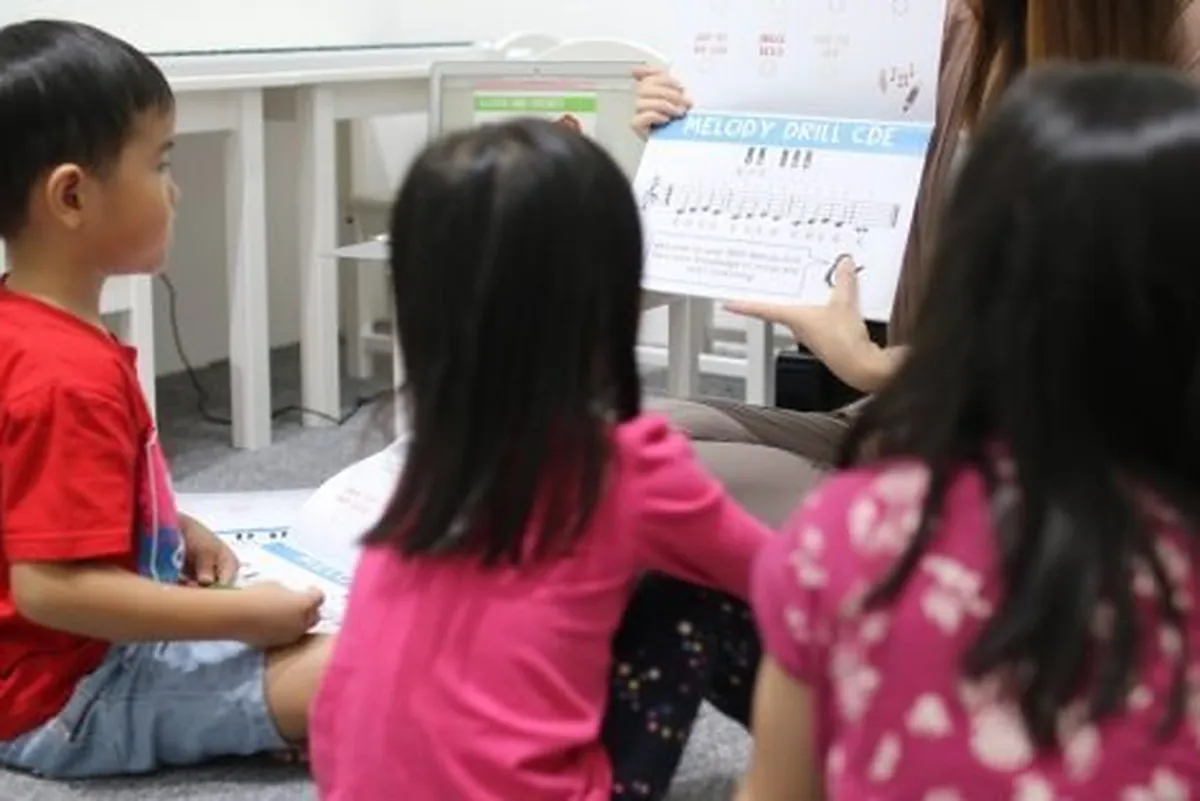
Piano practice fits all three, which is why it appears so often in the enrichment lists of families who are otherwise not pushing anything academic.
What a three-year-old is quietly building
At three, the visible achievements are small: a steady clap, a named note, four keys pressed in order. Underneath, four systems are developing at once:
- Attention. Staying with one activity for five to ten minutes is a skill that has to be practised, and it is the single best predictor of how a child settles into a classroom.
- Listening. Distinguishing “almost right” from “right” requires focused ears, not just focused eyes.
- Memory. Holding a short sequence in mind while the hands do something else is the same machinery used for early reading and number work.
- Persistence. Trying a bar again after getting it wrong, without an adult turning it into a test.
The cost of waiting for “the right age”
There is no penalty for starting at four instead of three. But “we’ll start when they’re ready” often becomes “we’ll start next year”, and next year becomes Primary 1, when the calendar is full and the child has less patience for being a beginner.
Starting early is not about head starts or competition. It is about using a window when a child has time, curiosity and no fear of looking silly — a combination that is genuinely harder to find at seven.
What a small, weekly structure changes
Families who add one structured activity to a three-year-old’s week usually notice the same things within a term:
- the child asks for it, because it has become part of the week
- sessions at home get easier, because there is something specific to do
- the child starts correcting themselves instead of waiting for an adult
- sitting still for a story or a meal improves, unglamorously and gradually
None of that is a transformation. It is the ordinary result of a child practising focus, listening and repetition in a setting they enjoy.
How to do it without turning childhood into a schedule
One structured activity is enough. Two is a lot at three. Keep the rest of the week loose — playground, sand, mess, boredom. The point of a piano lesson is not to fill the diary; it is to give the child one place where effort produces something they can hear.
Practically: ten minutes, four or five days a week, at the same time of day, with a parent nearby. That is the whole programme at this age. Anything longer is for the adult’s peace of mind, not the child’s progress.
Where to start, if you want to start now
JoyWaltz Academy has taught children from three years old since 2012, in international schools, preschools and five studios across Singapore. A trial class is complimentary, and it is the cheapest way to find out whether your child takes to it — one session tells you more than any article.
Book a free trial · See the courses · Read the FAQ · Term dates