
Most parents underestimate what a three-year-old can hold in their head. Ask a child of that age to copy a four-beat rhythm, and they will usually do it. Ask them to find every group of two black keys on a keyboard, and they will, faster than most adults. Ask them to sing a note name back to you, and it comes out in tune more often than not.
None of that is a party trick. It is the raw material lessons are built from — and it is already there, before any teaching.
What a three-year-old can already do
By three, most children can:
- copy a short rhythm by clapping or tapping
- match a sung pitch, roughly but recognisably
- recognise patterns — big/little, high/low, fast/slow
- follow a two-step instruction
- remember where something was yesterday
- repeat a favourite phrase or song accurately
These are the exact skills a beginner piano lesson uses. The lesson does not create them; it gives them somewhere to go.
What surprises parents in the first months
The gap is usually not in ability but in expectation. Parents expect a three-year-old to need simpler material than they do, and to need more repetition than they get. In practice, three-year-olds:
- Learn faster than the adult expects — one new idea per lesson is plenty, but it can be a real musical idea.
- Forget faster than the adult expects — which is why the same piece runs for weeks, and why that is progress rather than a plateau.
- Notice more than they can say — a child who cannot explain “that sounded wrong” will still stop and look at you.
- Copy the adult’s attitude — if practice is a chore for you, it becomes one for them within a fortnight.
The difference between “more than you think” and “too much”
There is a line, and it is not about difficulty — it is about duration and correction. A three-year-old can handle a new concept; they cannot handle a twenty-minute session or six corrections in a row. Keep sessions short and feedback to one thing, and the ceiling keeps moving. Push either, and the child stops wanting to sit down.
A useful rule: if the session ended while your child still wanted more, the difficulty was right. If it ended in tears, it was not the material — it was the length.
What this looks like in a lesson
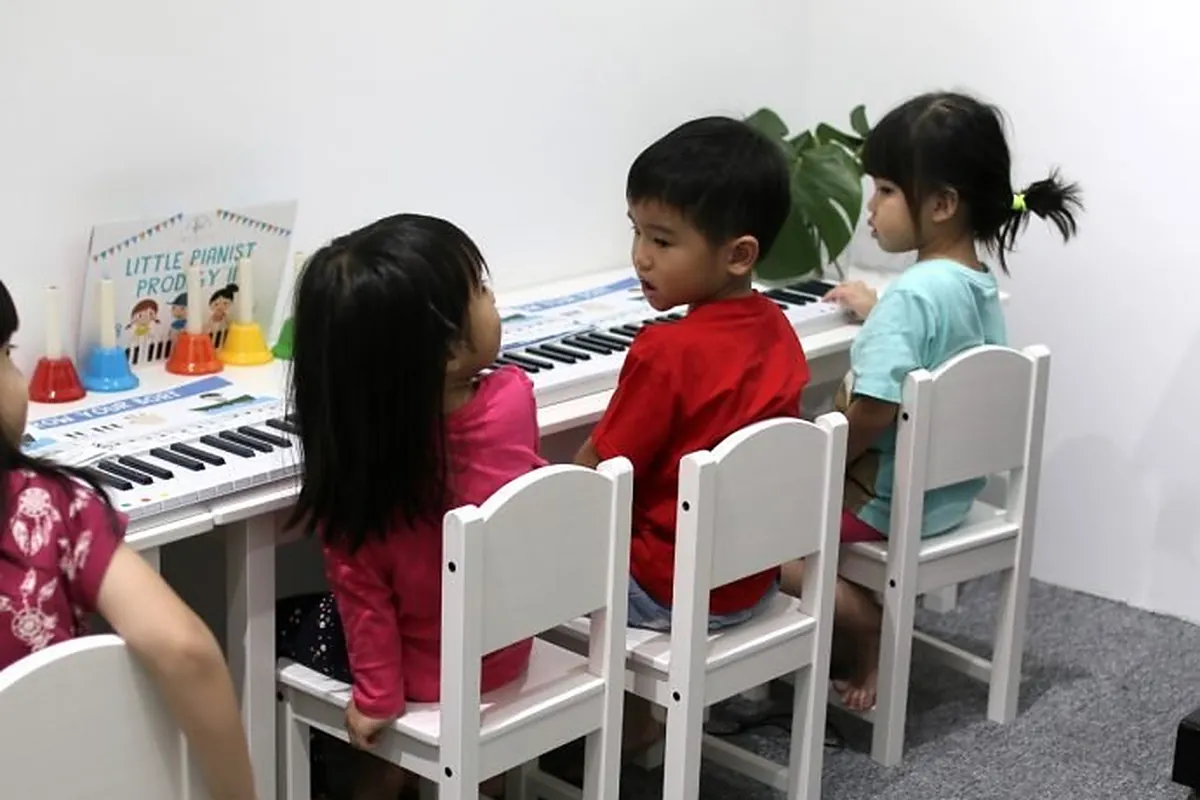
A first lesson for a three-year-old is short, active, and mostly sound: clapping a pulse, singing note names, finding black keys, pressing two keys in a pattern, then a song. There is no written theory, no sitting quietly, no exam language. The child leaves able to do one specific thing they could not do before — that is the whole design.
Group lessons add another dimension, because three to five children doing the same thing pull each other along in a way no adult can imitate.
How to find out where your child actually is
You cannot tell from a checklist at home. A trial lesson answers it in thirty minutes, because a teacher will ask your child to do something and watch what happens — not what the parent hopes will happen.
JoyWaltz Academy runs complimentary trial classes at five studios in Singapore, for children from three years old. Book a free trial, look at what each level covers, or read the FAQ first.