

Ask a parent why they signed their child up for piano and the answer is usually “because she likes music” or “because it’s good for them”. Ask them two years later what changed, and the answer is rarely about music at all.
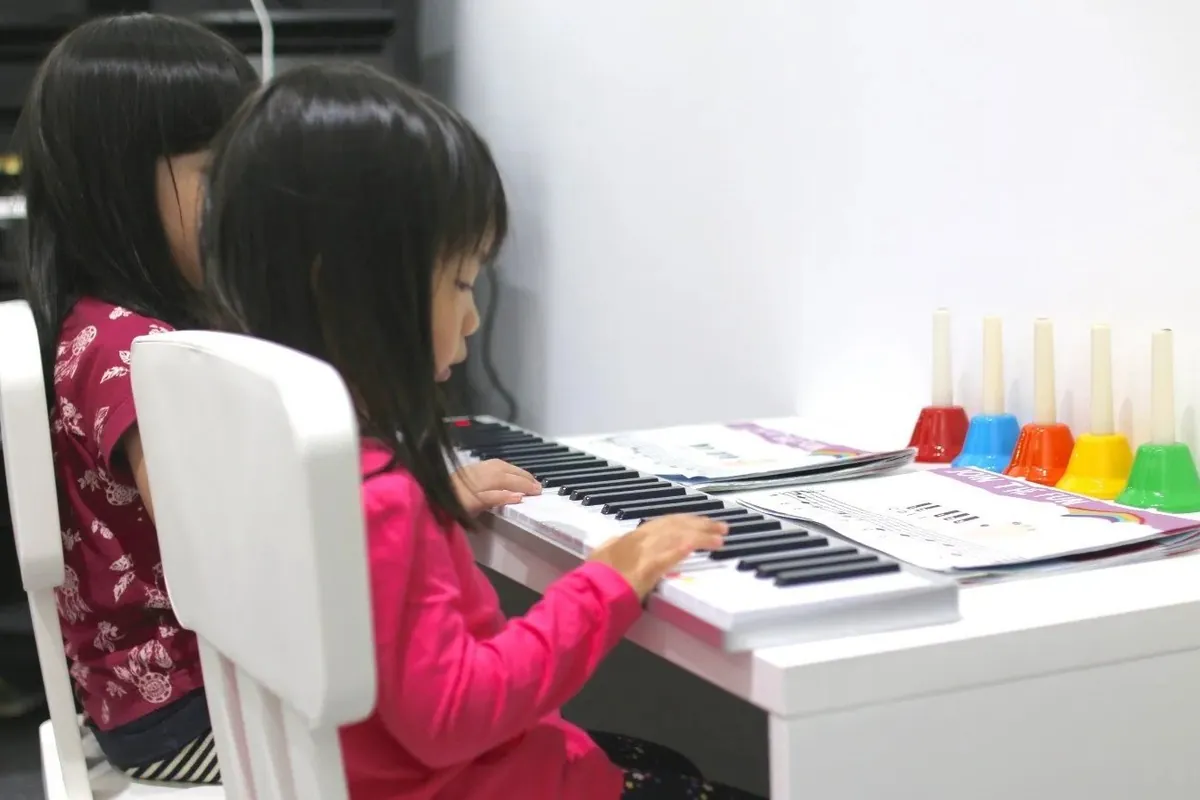
The visible outcome is music. The useful outcome is underneath it.
A child who plays a piece has learned something audible. What they practised to get there is a set of habits that show up everywhere else:
- Sustained attention — following one thing from beginning to end without drifting
- Auditory discrimination — hearing the difference between right and almost-right
- Working memory — holding a short sequence in mind while the hands do something else
- Fine motor control — separate fingers doing separate jobs, two hands doing different things
- Tolerance for repetition — getting better at something that stopped being interesting twenty minutes ago
- Performing under observation — playing for someone who is listening closely
Every one of those is a general skill. Music is simply the setting where a small child can practise them without it feeling like homework.
Why piano specifically, and not just any activity
Most activities for three-year-olds practise one or two of those at a time. Piano is unusual because it demands several simultaneously: read the page, count the beat, move the correct finger, listen for whether the note was right, and keep going. That combination is what makes it feel hard — and what makes the practice transferable.
It is also one of the few activities where progress is objective and immediate. A child can hear that yesterday’s bar is smoother today. That feedback loop is what teaches persistence, and it is hard to replicate with an app or a worksheet.
What the research does and does not say
The popular claim is that piano makes children smarter. The careful version: music training is associated with improvements in attention, auditory processing and executive function, and the effect is strongest when practice is regular over months rather than a single term.
What does not hold up is the idea of a general IQ boost that turns a child into a better student by itself. If your reason for starting lessons is “it will lift her maths grade”, you are likely to be disappointed — and, worse, you may push the child hard enough to make her quit before the habit forms. If the reason is “it trains her to focus and keep going”, the evidence is much friendlier.
The benefits parents actually report
In the order they usually appear, rather than the order brochures list them:
- Months 1–3: the child goes to the instrument without being carried, and can sit for a short session.
- Months 4–9: they start self-correcting; they hear their own mistakes before an adult points them out.
- Months 9–18: they can hold a piece in their head for a week, and repeat it without a prompt.
- Year 2: they perform something for someone else, and recover from a slip without stopping.
None of that is dramatic. All of it is what makes a child easier to teach at six.
What it will not do
It will not make a three-year-old read early, fix a sleep problem, or replace play. It will not work if practice is a nightly argument — a lesson a week with no instrument between lessons is entertainment, not tuition. And it will not deliver any of the above if the child is pushed to a level where they stop wanting to sit down.
If the point is the habits, not the grades
JoyWaltz Academy’s foundation programme is built for exactly this: children from three years old, short lessons, songs and repetition, with graded work deliberately left until later. The first class is complimentary, and it is the simplest way to see whether your child takes to the format.
Book a free trial · See the six levels · Read the FAQ