
Primary 1 does not begin on the first day of school. By the time a child walks into that classroom, most of what determines how the year goes has already been practised: sitting still, following instructions, waiting a turn, coping with being wrong, and staying with a task when it stops being fun.
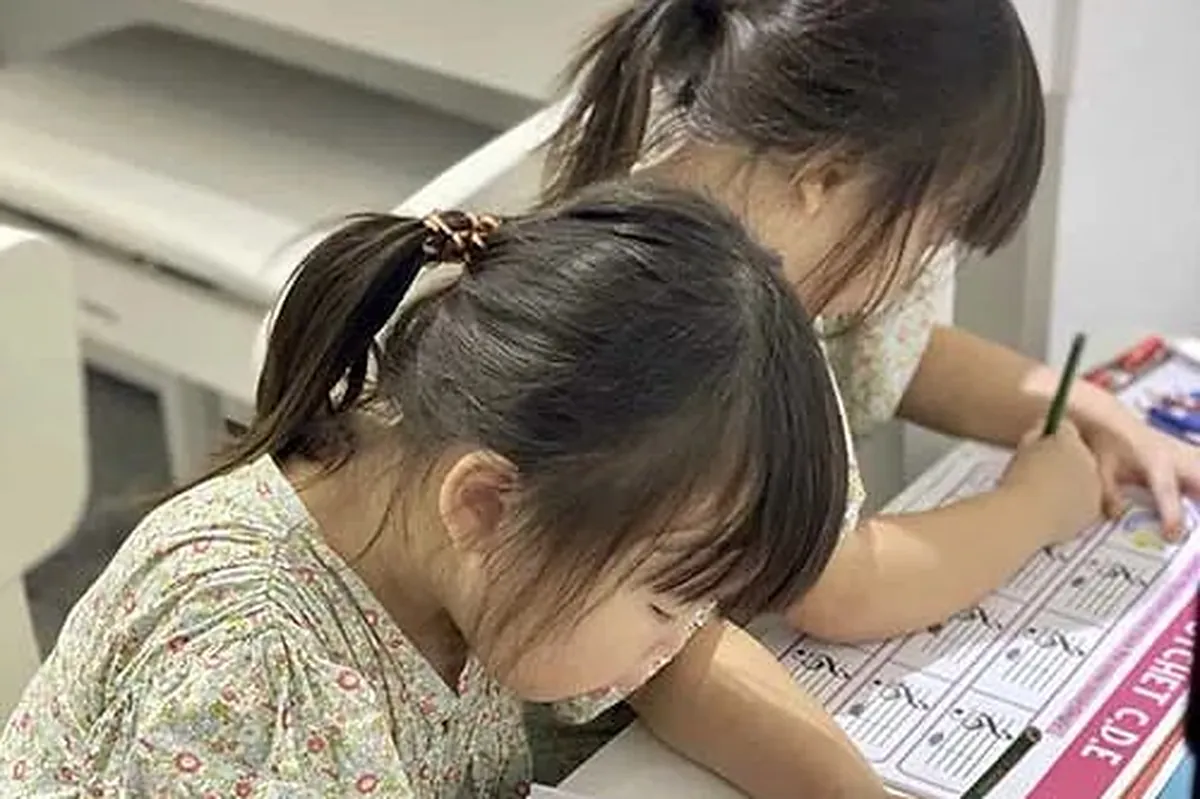
Those are not academic skills, and they are not taught by worksheets. They are habits, and habits are built years earlier — often in activities that look nothing like school.
What Primary 1 actually asks of a child
Ask any Primary 1 teacher what separates a child who settles in from one who struggles, and the answers are rarely about reading levels. They are about:
- sitting and focusing for fifteen to twenty minutes
- following a two- or three-step instruction without repeating it
- waiting for a turn in a group of thirty
- starting a task without an adult standing over them
- recovering after getting something wrong
- handling a change of plan without falling apart
Every one of those can be rehearsed at three, four and five — in a small setting, with an adult nearby, at a pace the child can absorb.
How a piano lesson rehearses school
A weekly piano lesson is a compressed version of a school day: a start time, an adult with an expectation, a task that has to be repeated until it is right, and an audience at the end. The mapping is unusually direct:
| What school asks for | What the lesson practises |
|---|---|
| Sitting and focusing | A short structured session at the instrument |
| Following instructions | “Left hand first, then both together” |
| Taking turns | Small group lessons of three to five children |
| Reading symbols left to right | Reading notation from the page, not the hands |
| Handling mistakes | Repeating a bar until it is right, without drama |
| Performing under mild pressure | Playing a finished piece for others |
Why starting before Primary 1 matters
In the year before school, most families are already busy: preschool, Chinese tuition, swimming, church or temple, family. Adding a new activity at six means competing with all of it, and starting a child as a complete beginner at exactly the moment they are being assessed on focus.
Starting at three or four spreads the same learning over a longer, calmer runway. The child arrives at Primary 1 already knowing how to be a student in a small room — which is the part nobody tests but everybody notices.
What to look for, practically
- A small group or one-to-one. Thirty children is not a place to learn turn-taking; three to five is.
- A predictable lesson shape. Same opening, same structure, new content in the middle. Predictability is what makes a habit.
- Performance, even small. Playing one piece for a parent is the low-stakes version of standing up in class.
- Sessions short enough to succeed. Ten focused minutes repeated beats an hour endured.
- An adult who does not correct everything. One thing per session; the rest is the child’s.
What this is not
It is not a substitute for preschool, and it is not academic preparation in disguise. A child who starts piano at three will not read earlier or do sums sooner. What they may well do is sit through a story, follow an instruction, and try again after a mistake — which is most of what the first year of school actually requires.
Where to start in Singapore
JoyWaltz Academy teaches children from three years old at five studios — Hougang, Yishun, Tai Seng, Punggol and Sengkang — and the first class is complimentary. Book a trial, see the courses, or check term dates if you are planning around the school year.
Nearest studio: Hougang · Yishun · Tai Seng · Punggol · Sengkang