

Three-year-olds are routinely underestimated, and routinely overestimated — often by the same parent, on the same day. They cannot yet tie a shoe, but they can remember which shop sells the blue ice cream. They lose interest in a game after four minutes, then ask for the same bedtime story for three weeks.
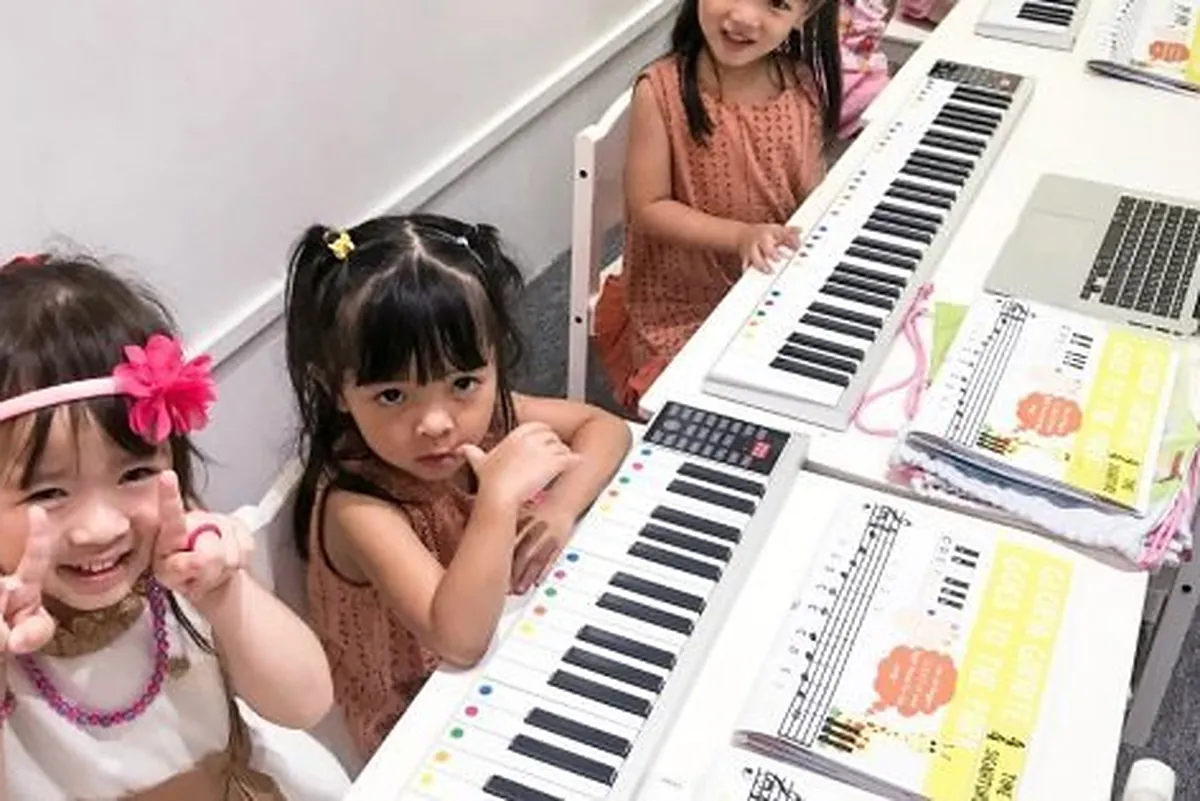
Getting the expectation right is most of the work. Too low, and a capable child is bored. Too high, and a curious child learns that they are bad at things.
What is genuinely normal at three
The developmental picture at three is wide. In a room of ten three-year-olds you will find all of the following, and none of it is a problem:
- a child who sits through a whole picture book, and one who is up after two pages
- a child who sings in tune, and one who speaks in a monotone
- a child who copies movements exactly, and one who approximates happily
- a child who asks “why” forty times a day, and one who watches quietly
Variation at this age says very little about later ability. It says a lot about temperament, and about how much practice a child has had at sitting still.
What they are capable of, with the right conditions
Give a three-year-old a short task, an adult’s attention and a predictable routine, and the ceiling rises noticeably. In a piano lesson, that looks like:
| Capability | What it looks like in practice |
|---|---|
| Pattern recognition | Finding every group of two and three black keys |
| Motor control | Pressing one key with one named finger |
| Auditory memory | Singing back a three-note phrase |
| Sustained attention | Five to ten minutes on one song |
| Sequencing | Playing four keys in the right order, twice |
| Self-correction | Stopping and restarting without being told |
Notice that none of these require reading, and none require sitting still for half an hour. They require short, repeated exposure with someone paying attention.
Where the “capable of so much” argument goes wrong
It goes wrong when capability is treated as an obligation. A three-year-old who can recognise patterns does not need a worksheet on them. A child who can sing in tune does not need to be told they are gifted. The point of knowing what a child can do is to give them something worth doing — not to fill every hour with achievement.
It also goes wrong when the adult mistakes speed for depth. A three-year-old can imitate almost anything for a week. Whether they can still do it in March is the real test, and that only comes from repetition that is boring to the adult and reassuring to the child.
What to expect in the first year
If your child starts at three and practises four or five short sessions a week:
- By three months: they go to the instrument willingly, clap in time, and know several note names.
- By six months: they play a short piece with one hand, with help reading it.
- By a year: two hands on a simple piece, and a performance for somebody.
Faster or slower than that is normal. What is not normal — and what is worth acting on — is a child who stops wanting to go at all.
How to find the right level
You cannot calibrate this at home. A teacher watches your child attempt something and adjusts within minutes; a parent watches and worries. That is why every programme worth considering offers a trial.
JoyWaltz Academy takes children from three years old, at five studios across Singapore, and the trial class is complimentary. Book a trial or look at what each level asks of a child.