
“Three is too young” is the most common reason parents delay a piano enquiry by a year or two. It sounds sensible. It is also, for most children, wrong — not because three-year-olds can play Beethoven, but because the thing that makes a beginner lesson work at three is not technical skill. It is repetition, songs and short attention.
Where the belief comes from
Almost every parent’s mental model of piano lessons is their own, or their cousin’s: thirty minutes of scales, a teacher tapping a ruler, an exam at the end of the year. Held against that picture, a three-year-old is obviously too young.
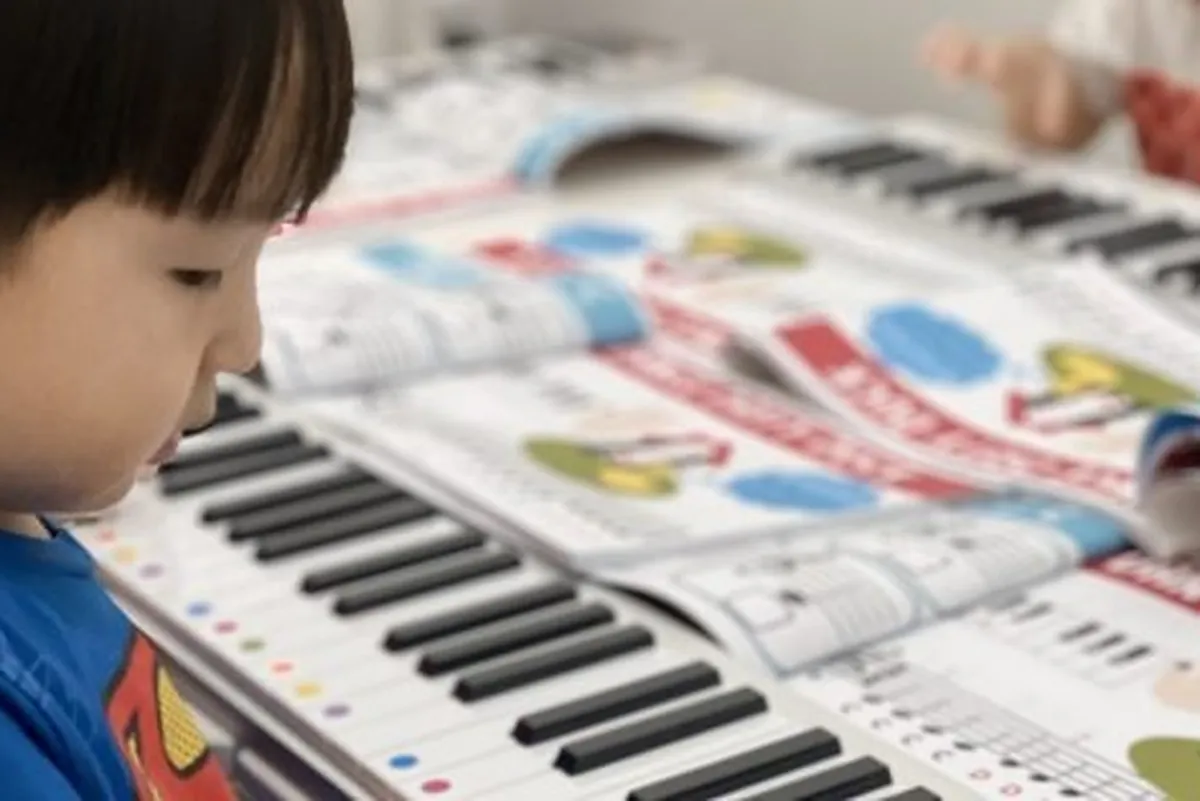
The picture is out of date. A lesson designed for a three-year-old contains no scales, no written theory and no exam language. It contains clapping, singing, finding keys and playing a song — with one small new idea per session.
What “ready” really requires
Strip it back and a beginner needs four things, all of which most three-year-olds have:
- Can copy a short rhythm — clap three beats, they clap three beats.
- Can follow a two-step instruction — “press this one, then that one”.
- Can stay with one activity for five minutes — with an adult nearby.
- Wants to try again after getting something wrong.
If a child cannot yet do those, waiting is sensible: three is a floor, not a deadline. If they can, the format can be adjusted to fit them, and the sooner the habit starts the easier it is to build.
What a three-year-old can actually learn
- the layout of the keyboard, including groups of two and three black keys
- a steady pulse, kept by clapping, tapping or stepping
- note names, sung before they are read
- using different fingers deliberately, rather than a flat hand
- a short piece, played start to finish
- the routine of practising — the part that matters most later
That is a real foundation. It is why children who start at three tend to arrive at graded work with better ears and stronger habits than children who start at six, even though they take longer to get there.
What is genuinely too young
Under three, most children are still developing the hand control and the tolerance for instruction that lessons rely on — which is why JoyWaltz Academy does not take students below three, counted from date of birth. If your child is two and a half, the honest answer is to come back closer to their third birthday.
Age is not the only factor either. A child in the middle of a big change — a new sibling, a move, starting preschool — will usually do better with a few months of settling first. That is a timing decision, not a verdict on their ability.
The cost of waiting a year
Waiting does not ruin anything. But at six, the child starts as a complete beginner at exactly the point school begins asking them to sit still and follow instructions — the two things a beginner piano lesson would have been practising for the previous three years. Starting at three spreads the same learning over a calmer runway.
See for yourself in one lesson
A trial class is the fastest way to test the belief, because it replaces opinion with observation. The first class is complimentary, parent-accompanied, and at five studios across Singapore.
Book a free trial · See the six levels · Read the FAQ · Term dates